Why Your Makeup May Need to Change When Your Skin Changes
THE SEASON OF RENEWAL
Why Your Makeup May Need to Change When Your Skin Changes
When a favorite foundation, concealer or powder suddenly doesn't look the way you remember, your makeup skills haven't disappeared. The canvas has simply evolved.
There are beauty products we trust almost without question.
The foundation we've worn for years.
The concealer we can apply without looking at the label.
The powder that has always finished everything beautifully.
Then one day, something changes.
Foundation seems more noticeable.
Concealer settles where you don't remember having anything for it to settle into.
Powder that once created a polished finish suddenly makes the complexion look flat.
Blush doesn't seem to sit quite where you want it.
You may even find yourself applying more makeup to get the result that once required less.
And that's usually when the frustration begins.
What am I doing wrong?
Perhaps nothing.
The products and techniques that once worked beautifully were being applied to the skin you had then.
You're applying them to the skin you have now.
And those two things don't always behave exactly the same way.
Makeup Isn't Separate From Skincare
We tend to place skincare and makeup into two different categories.
Skincare happens first.
Makeup happens afterward.
But visually, they are inseparable.
Foundation can only sit on the surface beneath it.
Concealer responds to the texture and movement of the eye area.
Powder responds to oil, moisture and texture.
Blush and bronzer respond to whatever complexion products are underneath them.
So when your skin changes, your makeup may start behaving differently even though the makeup itself hasn't changed at all.
That makes the first step surprisingly simple:
Before changing your makeup, look at your skin.
Does it feel comfortable?
Does it feel tight?
Does foundation catch on certain areas?
Does makeup separate later in the day?
Does your skin look more textured with makeup than without it?
Those observations tell us far more than your age ever could.
The Goal Isn't “Makeup for Older Women”
Let's get something out of the way.
There isn't one universal makeup rule for women over 50.
Or 60.
Or 70.
Two women of exactly the same age can have completely different skin, preferences, lifestyles and desired finishes.
One may adore a luminous complexion.
Another may prefer matte.
One may love barely-there makeup.
Another may consider a red lip appropriate for breakfast.
Neither is doing mature beauty incorrectly.
So rather than asking:
“What makeup should a woman my age wear?”
Try asking:
“What gives me the result I want on the skin I have now?”
That's a much more useful beauty question.
1. Your Foundation May Be Doing More Than You Need
One of the easiest habits to carry forward is full-face foundation application.
Forehead.
Cheeks.
Nose.
Chin.
Everywhere.
But perhaps your skin doesn't require equal coverage everywhere anymore.
Instead of automatically applying the same amount across the entire face, look at where you actually want coverage.
Perhaps it's primarily around the center of the face.
Maybe uneven tone is the concern rather than overall coverage.
Maybe you simply want a more polished complexion.
Try starting with less and building only where needed.
This isn't an age rule.
It's a technique.
And it can make complexion makeup look considerably more like skin.
2. More Concealer Isn't Always More Concealing
The under-eye area moves.
We smile.
Squint.
Laugh.
Blink.
Expression is part of the face.
As the appearance and texture of that area changes, a concealer technique that once worked beautifully may become more noticeable.
The instinct is often to cover more.
But adding more product can sometimes make the makeup itself more visible.
Instead, experiment with strategic placement.
Where is the discoloration actually occurring?
Inner corner?
A shadow beneath the eye?
One particular area?
Start there.
Blend.
Then look again before adding anything else.
The goal isn't to create an entirely different under-eye area.
It's to use makeup where it actually helps.
3. Powder Isn't the Enemy
You've probably encountered the beauty decree:
Women over 50 shouldn't wear powder.
I don't agree with blanket rules like that.
Powder can be useful.
It can set makeup.
Reduce unwanted shine.
Help certain products last longer.
Create a finish you prefer.
The issue is rarely simply powder versus no powder.
It's often:
How much?
What formulation?
Applied where?
With what tool?
Over what products?
A light application in strategic areas can behave very differently from heavily powdering the entire face.
So if powder no longer gives you the finish you want, don't necessarily banish it.
Reassess how you're using it.
4. Texture Matters More Than the Category Name
Cream blush isn't automatically flattering.
Powder blush isn't automatically aging.
Liquid foundation isn't inherently superior to cream foundation.
Marketing categories can't tell you exactly how a particular formulation will behave on your skin.
Two powder blushes can have completely different textures.
Two foundations marketed as “hydrating” can look entirely different.
So instead of shopping exclusively according to rules like:
Mature women should use cream products,
pay attention to:
Finish.
Texture.
Pigment.
Blendability.
Wear.
And most importantly:
How does this particular product look on you?
Your mirror gets a vote.
5. Placement Can Change Before Color Does
Sometimes the product itself isn't the problem.
The placement is.
Perhaps you've applied blush to exactly the same spot for twenty years.
There's nothing inherently wrong with that.
But experimenting with placement can subtly change the balance of the face.
Try your usual placement.
Then on another day, move the color slightly.
Higher.
More outward.
Softer toward the center.
Less product.
More diffused edges.
Take a photograph in natural light.
Compare.
Not because there is a universally “correct” mature blush placement.
There isn't.
You're looking for your preferred result.
Makeup should be experimentation, not obedience.
6. Your Foundation Shade May Not Be as Permanent as You Think
Many women know their foundation shade almost like their shoe size.
But skin tone can vary.
Seasonal sun exposure can change.
A summer shade may look slightly different as fall arrives.
Changes in pigmentation, undertone or the areas where you apply foundation can affect what looks harmonious.
So occasionally reassess your shade in good natural light.
Don't judge exclusively from the back of your hand.
Look at the relationship among your face, jawline, neck and visible upper chest.
The objective isn't to create a mask of one uniform color.
It's harmony.
And September is an ideal moment to check before heading into fall.
7. Your Finish May Be Ready for a Change
For years you may have loved very matte makeup.
Or perhaps you've always wanted maximum glow.
Either can still be beautiful.
But if your preferred finish no longer looks quite the way you want, experiment before abandoning the product entirely.
Perhaps preparation needs changing.
Perhaps less powder helps.
Perhaps strategic luminosity works better than luminosity everywhere.
Perhaps the opposite is true and you want to control shine selectively.
Think in terms of placement, not absolutes.
Matte and luminous can coexist beautifully on the same face.
8. Brushes Can Change the Result
The same foundation applied with fingers, a sponge and a brush can look remarkably different.
The same is true for blush, powder and concealer.
So before deciding a product no longer works, change the application method.
Try a lighter hand.
Try a different brush.
Try pressing rather than sweeping.
Try blending longer.
Try less product.
Sometimes what looks like a product problem is actually an application problem.
And that is considerably less expensive to solve.
The Five-Minute Makeup Reassessment
Here's something I'd like you to try this September.
One morning when you're not rushing, apply your makeup as you normally do.
Then stop.
Stand near a window.
Not directly under the bathroom lights.
Look at your complexion from a normal conversational distance.
Then ask:
Where does my makeup look beautiful?
Start there.
We spend far too much time searching immediately for what's wrong.
Now look again.
Where do I notice the makeup before I notice my skin?
Is there more foundation than you need?
Too much powder somewhere?
Concealer that could be more strategically placed?
A blush edge that wants a little more blending?
Make one adjustment.
Not ten.
Then look again.
That's reassessment.
Don't Replace Everything at Once
This is especially important.
When makeup suddenly feels different, it is tempting to replace:
foundation,
primer,
concealer,
powder,
brushes,
and perhaps half the bathroom while we're at it.
Don't.
Change one variable at a time.
Otherwise, you won't know what actually improved the result.
Start with application.
Then amount.
Then placement.
Then preparation.
Then formulation.
And only then decide whether a different product might serve you better.
That approach is better for your beauty routine—and considerably kinder to your wallet.
Keep the Things That Still Make You Feel Like You
Renewal can easily be misunderstood as:
Everything you've been doing is outdated.
I don't believe that.
If you've worn black eyeliner for thirty years and love yourself in black eyeliner, keep wearing it.
If you adore full lipstick, wear it.
If shimmer makes you happy, shimmer hasn't received instructions to retire because you turned 60.
If you prefer a completely bare face, that's equally valid.
There is a difference between a beauty habit that has stopped serving you and a signature that still delights you.
Keep the second one.
Makeup Should Move With You
The most sophisticated beauty routines aren't frozen in time.
They evolve.
Sometimes dramatically.
More often almost imperceptibly.
A little less foundation.
A different brush.
A slightly richer lipstick.
A softer concealer placement.
A foundation shade adjusted for the season.
A blush moved half an inch.
Tiny changes.
Beautiful results.
That is what September's Season of Renewal is really about.
Not becoming someone different.
Not surrendering your signature.
Not following another list of things women “of a certain age” supposedly aren't allowed to do.
It's simply paying attention.
Because if your skin has changed, your makeup doesn't have to fight against it.
It can change beautifully with you.
— Timeless Beauty Atelier
Enjoyed this article?
Continue exploring our complimentary beauty resources created especially for women over 50.
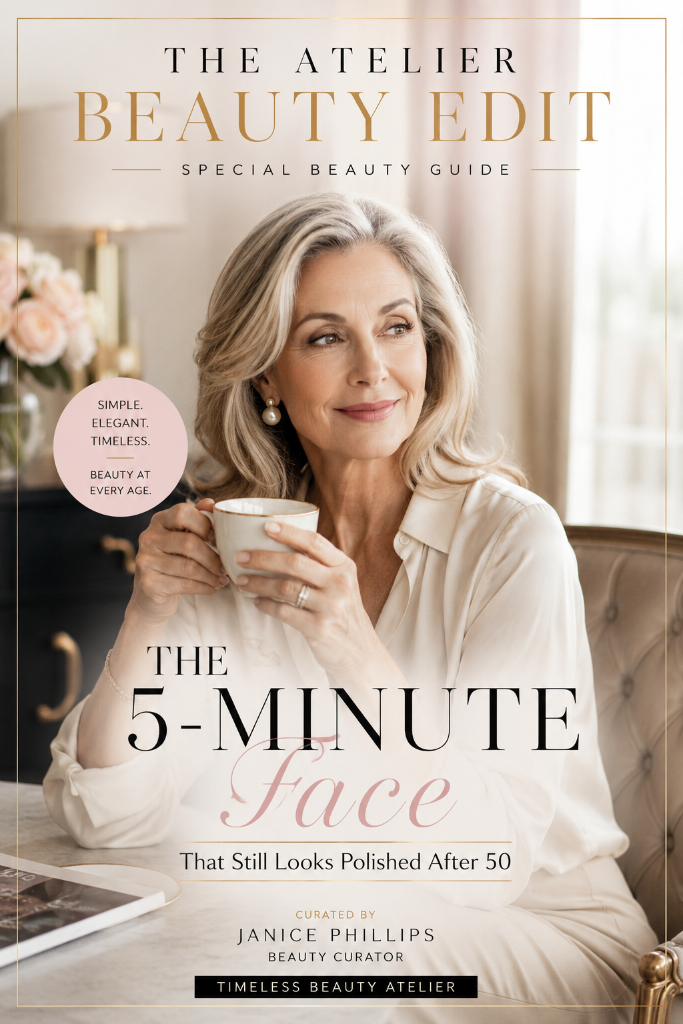
The 5-Minute Face That Still Looks Polished After 50
Discover a beautifully simple makeup routine designed specifically for mature skin.
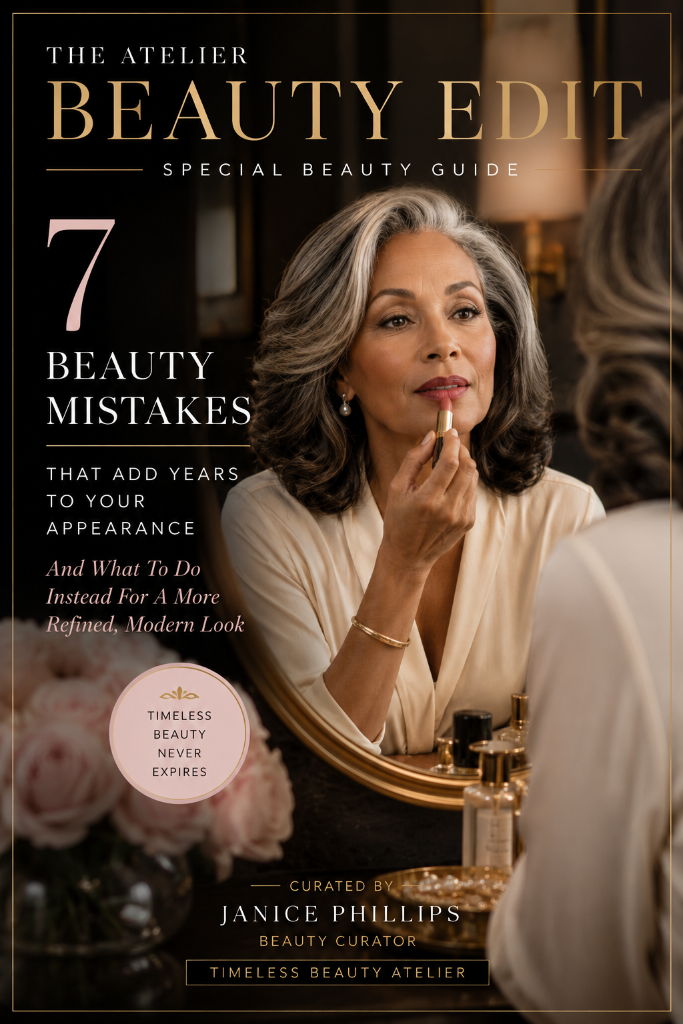
7 Beauty Mistakes That Add Years to Your Appearance
Learn seven common beauty habits that may unintentionally age your appearance—and the simple changes that can make a noticeable difference.
Continue Your Timeless Beauty Journey
Join the Timeless Beauty Atelier Society for beauty tips, skincare insights, exclusive offers, and monthly beauty inspiration designed for women who appreciate timeless elegance.