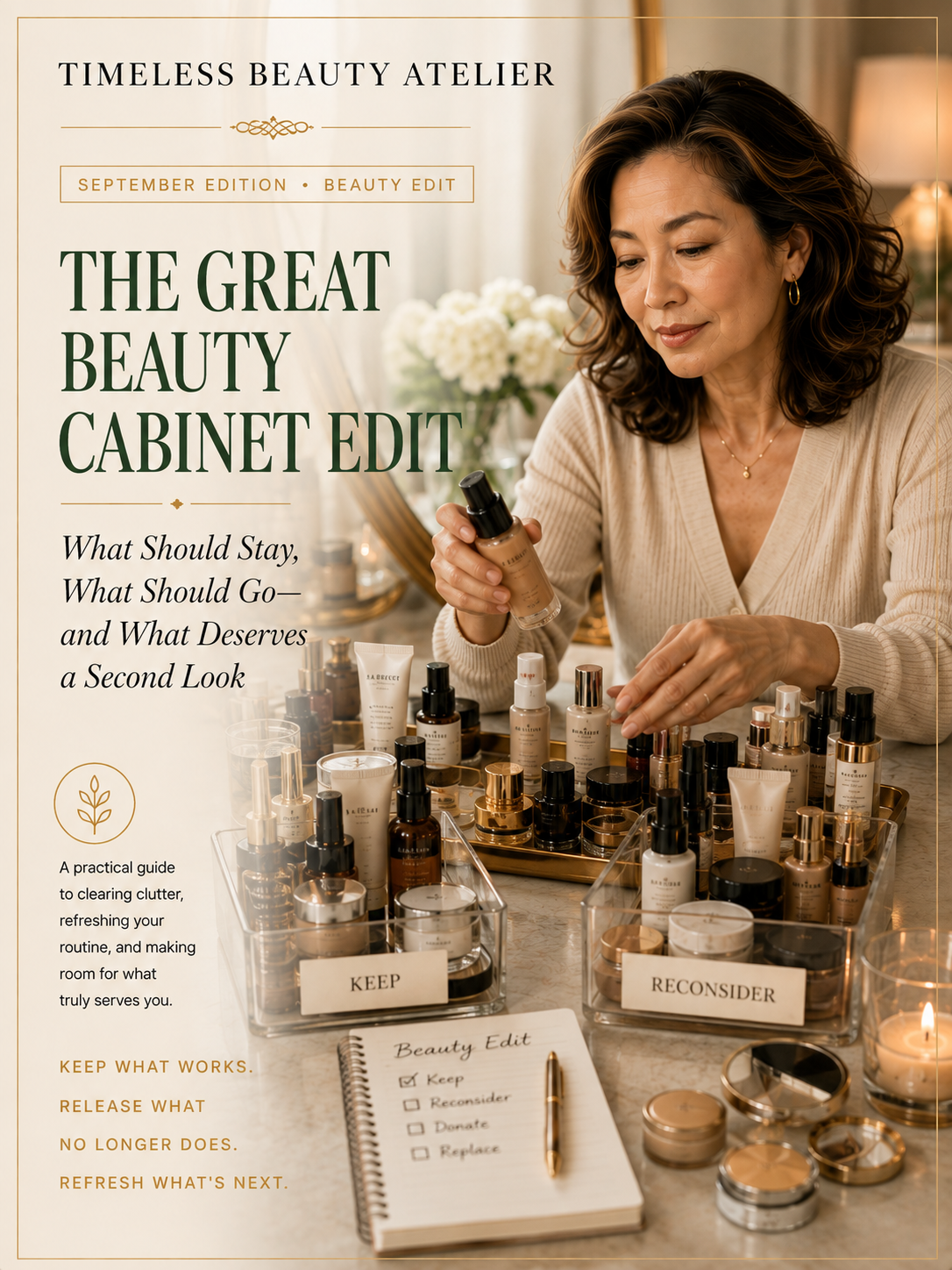
The Forgotten Beauty Routine: When Did You Last Clean Your Makeup Brushes?
THE SEASON OF RENEWAL
The Forgotten Beauty Routine: When Did You Last Clean Your Makeup Brushes?
We cleanse our skin, carefully choose what we put on it, and invest in products designed to help it look its best. But what about the tools touching our face every day?
You washed your face this morning.
Perhaps you applied serum and moisturizer.
You carefully selected your foundation, blended your concealer and added just enough blush.
And somewhere between the skincare and the finished face, several things touched your skin.
A foundation brush.
A sponge.
A powder brush.
Perhaps an eye shadow brush.
Maybe an eyelash curler.
Tomorrow, many of those same tools will touch your face again.
And the day after that.
Which raises a surprisingly simple question:
When did you last clean them?
If your answer involves staring thoughtfully into the distance while trying to remember, you're in very good company.
Makeup brushes are among the hardest-working items in a beauty routine—and among the easiest to forget when cleaning day comes around.
September's Season of Renewal seems like the perfect time to give the beauty tools a little attention too.
What's Actually on a Makeup Brush?
A brush doesn't only pick up makeup.
During normal use, it repeatedly comes into contact with cosmetics, natural skin oils and whatever residue is already present on the skin or other surfaces it touches.
Over time, product can accumulate within the bristles.
Think about a foundation brush.
It picks up foundation.
Touches the face.
Returns to the product or palette.
Touches the face again.
Then perhaps goes back into a makeup bag or sits on the vanity until tomorrow.
Now repeat that routine for days.
It's easy to see how a brush can become something worth cleaning regularly.
And there is another reason that has nothing to do with alarmist beauty headlines:
Clean tools often perform better.
Your Brush May Be Changing Your Makeup
Remember our September conversation about makeup suddenly not behaving the way it used to?
Sometimes the culprit isn't the foundation.
Or your skin.
It might be the brush.
A brush loaded with old product may not distribute fresh product the same way a clean brush does.
Bristles can become coated.
Powder brushes can lose some of their softness and movement.
Colors can become muddy when pigment from previous applications remains in the brush.
A sponge containing old foundation isn't starting tomorrow's makeup application with a clean slate.
So before deciding:
“This foundation doesn't work anymore,”
there is a remarkably inexpensive experiment to try.
Clean the tool.
Then use the product again.
You might be surprised by the difference.
Not Every Brush Needs the Same Schedule
This is where beauty advice can become unnecessarily rigid.
You'll see rules online declaring that every makeup brush must be washed according to one universal timetable.
Real beauty routines aren't quite that simple.
A foundation brush used frequently with liquid or cream product has different usage conditions from a brush you occasionally use for powder highlighter.
A personal brush isn't being used on multiple clients the way a professional makeup artist's tools might be.
How often a tool should be cleaned can therefore depend on factors including:
what it is used for,
how frequently it is used,
whether the product is liquid, cream or powder,
where on the face the tool is used,
and
the manufacturer's care instructions.
Rather than obsessing over a single magic number, develop a consistent cleaning routine appropriate for the tools you own.
And don't wait until you can actually see weeks of product living in the bristles.
At that point, the brush has already submitted its resignation letter.
The Tools That Deserve Particular Attention
Foundation and Concealer Brushes
These frequently work with liquid or cream products.
If you notice visible buildup, stiffening or product remaining deep in the bristles, they're asking for attention.
Clean tools can also help you judge the product itself more accurately.
Eye Brushes
Eye-area hygiene deserves extra care.
Brushes used around the eyes should be kept clean, should not be shared casually, and shouldn't be used if doing so conflicts with guidance related to an eye infection or irritation.
And if you're switching between dramatically different colors, cleaning also keeps yesterday's smoky plum from unexpectedly joining today's champagne eye.
Unless, of course, that was the plan.
Powder, Blush and Bronzer Brushes
Because powder brushes don't always look dirty, they can be easy to overlook.
But pigments and product still accumulate.
If your blush colors seem muddy or a brush no longer feels or performs the way it normally does, cleaning is a sensible first step.
And Then There Are the Sponges
Beauty sponges deserve their own conversation.
They repeatedly absorb or encounter liquid and cream cosmetics, moisture and product residue.
Follow the manufacturer's instructions for cleaning, drying and replacement, and don't keep using a sponge that has deteriorated or cannot be properly cleaned.
Most importantly:
Let reusable tools dry properly.
Washing something and immediately sealing it damp inside a closed cosmetic bag isn't exactly the triumphant hygiene victory we were aiming for.
How to Clean a Makeup Brush Without Turning It Into a Science Project
Start with the manufacturer's instructions when they're available, particularly for specialty or expensive brushes.
For many conventional makeup brushes, the process is refreshingly uncomplicated.
Step 1 — Wet the bristles
Use comfortably lukewarm water.
Try to focus the water primarily on the bristles rather than repeatedly saturating the area where the bristles are attached to the handle.
Step 2 — Clean gently
Use an appropriate gentle brush cleanser or cleaning product recommended for your tools.
Work the cleanser carefully through the bristles.
The objective is to remove accumulated cosmetic product—not punish the brush for its crimes.
Step 3 — Rinse thoroughly
Continue until the cleanser and loosened product have been removed.
Particularly dense brushes may need a little more attention.
Step 4 — Remove excess water gently
Don't aggressively twist or pull at the bristles.
Reshape them if necessary.
Step 5 — Let the brush dry completely
Place it in a position that allows the bristles to dry thoroughly and helps preserve the brush's construction.
Avoid trapping a damp brush inside a closed container.
And resist the temptation to use intense direct heat unless the brush manufacturer specifically recommends it.
Your hair dryer does not need a new assignment.
Don't Forget the Handles
We spend so much time concentrating on bristles that we forget what our hands actually touch.
Brush handles.
Compact exteriors.
Makeup palettes.
Cosmetic bags.
Drawer handles.
The outside of foundation bottles.
The tools used to apply the products are part of a larger beauty workspace.
They don't need to be sterilized like an operating room.
But periodically wiping and cleaning appropriate surfaces according to their care instructions is a perfectly sensible habit.
The Eyelash Curler Has Entered the Conversation
Take a look at yours.
Really look.
The pad can accumulate makeup residue during normal use, particularly when a curler is used around eye makeup.
Clean it according to the manufacturer's instructions and inspect the pad and mechanism periodically for wear or damage.
This takes very little time.
Yet it's exactly the sort of tiny beauty-maintenance task that can go unnoticed for months.
What About Tweezers?
Same principle.
They repeatedly come into close contact with skin and hair.
Keep them clean according to the manufacturer's instructions, store them appropriately and inspect the tips.
Good tweezers can last a very long time.
They simply shouldn't be treated as though they clean themselves overnight.
They don't.
I've checked.
Your Makeup Bag Deserves an Edit Too
Here's one of the easiest things to overlook.
We clean the brushes.
Then put them directly back into...
the same makeup bag.
The one with powder in the corners.
A foundation mark on the lining.
An uncapped pencil shaving.
And something mysterious that we're all agreeing not to investigate too closely.
Empty it.
Check the care label.
Clean or wipe it as appropriate for the material.
Allow it to dry completely.
Then return your clean tools.
Now we've actually accomplished something.
Clean Doesn't Mean Forever
Cleaning can extend the useful life of many reusable beauty tools.
But it can't make every tool immortal.
Inspect what you're using.
Is a brush shedding excessively?
Has its shape permanently changed?
Are the bristles damaged?
Is a sponge deteriorating?
Is an eyelash-curler pad worn or damaged?
Is a tool broken in a way that makes it difficult to use properly?
Sometimes cleaning is the answer.
Sometimes replacement is.
Part of a good beauty edit is knowing the difference.
A Simple Beauty-Tool Reset
You don't need another elaborate maintenance schedule taped to the bathroom mirror.
Instead, choose a recurring moment that already exists in your life.
Perhaps:
Sunday evening.
The first weekend of the month.
The evening before you wash your makeup bag.
The day you change your bed linens.
Whatever you can remember.
Gather the tools that need attention.
Clean them appropriately.
Allow them to dry.
Inspect them.
Return them to a clean storage area.
The routine doesn't have to be glamorous.
It just has to happen.
One More Thing: Don't Share Everything
Sharing a lipstick shade recommendation?
Absolutely.
Sharing the actual mascara wand?
No.
Cosmetics and tools that come into close contact with the eyes, lips or skin shouldn't automatically become communal simply because someone wants to try the color.
If you'd like another person to sample a product, use hygienic single-use or otherwise appropriate methods rather than casually sharing applicators.
Beauty recommendations are generous.
Microorganisms needn't be.
The Five-Minute Vanity Check
While we're in September reassessment mode, stand at your vanity and look at the tools you use most frequently.
Ask:
Which tools touched my face this week?
Which need cleaning?
Which need replacing?
Which do I never use?
Where are the clean tools being stored?
And perhaps most importantly:
Do I actually need all of these?
That last question may uncover six nearly identical foundation brushes while the one you genuinely love is hiding beneath them.
Keep the good one accessible.
Beauty routines become easier when the tools you actually use are the tools you can actually find.
The Atelier Perspective
There's something interesting about beauty maintenance.
We naturally focus on the glamorous part:
the lipstick,
the serum,
the beautiful compact,
the finished face.
But some of the most useful beauty habits happen quietly behind the scenes.
Cleaning a brush.
Washing a sponge.
Wiping out a makeup bag.
Checking an eyelash curler.
Putting clean tools back into a clean space.
None of it will appear in a perfume advertisement.
But all of it supports the ritual.
And that is part of September's renewal too.
Not buying something.
Not correcting something.
Not trying to become younger.
Simply taking better care of the beautiful things we already use.
Sometimes the beauty product that needs attention isn't the product at all.
It's the brush in your hand.
— Timeless Beauty Atelier
Enjoyed this article?
Continue exploring our complimentary beauty resources created especially for women over 50.

The 5-Minute Face That Still Looks Polished After 50
Discover a beautifully simple makeup routine designed specifically for mature skin.
7 Beauty Mistakes That Add Years to Your Appearance
Learn seven common beauty habits that may unintentionally age your appearance—and the simple changes that can make a noticeable difference.
Continue Your Timeless Beauty Journey
Join the Timeless Beauty Atelier Society for beauty tips, skincare insights, exclusive offers, and monthly beauty inspiration designed for women who appreciate timeless elegance.