
More Skincare Isn’t Always Better
Why a Simpler Routine May Be Exactly What Mature Skin Needs
Somewhere along the way, skincare became a numbers game.
More serums. More actives. More steps. More promises.
A cleanser is followed by an essence, toner, exfoliant, antioxidant, peptide serum, retinoid, eye treatment, moisturizer, facial oil—and perhaps another product we saw recommended yesterday.
It can begin to feel as though caring well for our skin requires an entire shelf of products.
But especially as skin matures, more skincare does not necessarily mean better skincare.
In fact, one of the most valuable things we can learn about our skin after 50 is how to distinguish between what it coulduse and what it actually needs.
Beautiful skin isn't created by using everything.
It comes from using the right things, consistently and thoughtfully.
Mature Skin Doesn't Need to Be Constantly Corrected
There is an enormous beauty industry built around identifying things we should supposedly fix.
Fine lines. Texture. Pigmentation. Loss of firmness. Dryness. Dullness. Enlarged pores. Uneven tone.
Suddenly, perfectly normal changes in mature skin can begin to look like a very long shopping list.
But aging skin isn't defective skin.
As we get older, natural changes can affect how our skin behaves. It may retain moisture differently, feel drier, recover more slowly from irritation and become less tolerant of aggressive treatments that once caused no problem at all.
That doesn't mean we should stop using effective skincare.
It means our approach may need to become more discerning.
Instead of asking:
What else should I add?
Try asking:
What does my skin need from me right now?
That small change in thinking can completely change the way we approach beauty.
The Problem With Doing Too Much
One of the easiest skincare traps to fall into is treating every concern separately.
Dryness? Buy something.
Fine lines? Add something.
Dark spots? Another serum.
Texture? Another active.
Dullness? Exfoliate.
Before long, several individually useful products may be competing for space in the same routine.
The problem isn't necessarily that any one of those products is bad.
It's that our skin experiences the entire routine—not each product in isolation.
Multiple exfoliating acids, retinoids and other active ingredients used too frequently can sometimes leave skin feeling irritated, tight, flaky or unusually sensitive.
And here's where things can get particularly confusing:
When skin starts looking worse, our instinct may be to add another product to fix it.
Sometimes what the skin actually needs is less.
A Good Routine Has a Job
Instead of building a skincare collection, build a routine with a purpose.
For most women, the foundation can be surprisingly straightforward.
1. Cleanse
Cleansing should remove makeup, sunscreen, excess oil and the day's accumulation without leaving your face feeling stripped.
If your skin feels painfully tight immediately after cleansing, don't automatically assume that's what "clean" is supposed to feel like.
It may be worth reconsidering your cleanser or how you're using it.
2. Treat
This is where skincare becomes personal.
A treatment product should address a specific reason you've chosen it.
Perhaps you're interested in improving the appearance of uneven tone, supporting hydration, addressing texture or incorporating a well-tolerated retinoid.
But treatment shouldn't mean throwing every active ingredient at your face simultaneously.
Choose your priorities.
A focused routine is much easier to evaluate than a complicated one.
3. Moisturize
Moisturizer isn't the boring step between your expensive serum and the rest of your routine.
For mature skin, it can be one of the most important.
A well-chosen moisturizer helps support the skin barrier and reduce moisture loss, which can make skin feel more comfortable and appear smoother and more supple.
Sometimes the glow we're chasing isn't another active.
It's simply well-hydrated skin.
4. Protect
If we're talking about long-term skin care, sun protection belongs in the conversation.
Broad-spectrum sunscreen helps protect skin from ultraviolet radiation associated with sun damage and premature visible skin aging.
And no—the sunscreen doesn't become unnecessary because summer ended.
Protection is part of the routine, not a seasonal beauty accessory.
Before You Add Another Product, Ask These Four Questions
This is the habit I'd particularly like women to take away from this article.
When you're tempted by another beautiful bottle—and goodness knows, beauty marketing can make a bottle sound like it contains bottled youth—ask:
What problem am I trying to solve?
If you can't identify the reason for adding the product, you probably don't need it yet.
Am I already using something that does this?
Different products often contain overlapping ingredients or serve similar purposes.
Is my current routine actually working?
Give a sensible routine enough consistency to evaluate it before constantly changing course.
And finally:
How does my skin feel?
Not what does an advertisement say it should feel like.
Not what someone else's skin looks like.
Your skin.
Comfort matters.
Introduce New Products Slowly
There is another advantage to simplifying skincare: when something goes wrong, you have a fighting chance of figuring out what caused it.
Introduce several new products simultaneously and suddenly develop irritation?
Now you're playing skincare detective.
Instead, consider adding new products individually and giving your skin time to adjust.
Patch testing can also be useful, particularly when trying something new or if your skin tends to be sensitive.
And if a product causes persistent burning, swelling, significant irritation or another concerning reaction, stop using it and seek appropriate professional guidance.
Skincare should never become an endurance contest.
Expensive and Complicated Are Not Synonyms for Effective
This one is worth saying plainly.
A twelve-step routine isn't automatically more sophisticated than a four-step routine.
And an expensive product isn't automatically better for your particular skin than a moderately priced one.
Beautiful packaging can make skincare enjoyable—and there is absolutely nothing wrong with enjoying beautiful things.
But packaging isn't efficacy.
What matters more is whether the formulation suits your skin, whether you're using it appropriately and whether you can maintain the routine consistently.
A simple routine that you actually follow will usually serve you better than an elaborate ritual you abandon after three weeks.
Your Routine Can Change
Simplifying skincare doesn't mean choosing four products at 52 and using them until you're 92.
Your skin isn't static.
Climate changes. Seasons change. Hormonal changes happen. Medications can affect the skin. Travel can affect it. Your preferences change.
So should your routine when necessary.
The goal isn't rigidity.
It's intentionality.
Pay attention.
Adjust when there is a reason to adjust.
But resist the idea that your routine must constantly expand in order to improve.
Sometimes refinement means removing something.
The Luxury of Knowing What Works
There is something wonderfully liberating about reaching a point where you no longer feel compelled to chase every beauty trend.
You know your skin.
You know what it likes.
You know what it doesn't tolerate.
You know which steps make a meaningful difference and which ones simply make your bathroom counter more crowded.
That knowledge is its own kind of luxury.
Because mature beauty doesn't need to be about desperately trying to outsmart time.
It can be about becoming increasingly selective about where we place our attention, our money and our energy.
And perhaps that is the real evolution of a beauty routine after 50:
Not doing less simply for the sake of minimalism.
But doing what matters—and letting the rest go.
The Timeless Beauty Takeaway
More skincare isn't always better skincare.
Start with the essentials.
Cleanse thoughtfully.
Treat intentionally.
Moisturize generously when your skin needs it.
Protect consistently.
Then add something only when you can answer one simple question:
What is this product going to do for my skin that my current routine isn't already doing?
If you have a good answer, wonderful.
If you don't?
Your skin may already have everything it needs.
Pay attention. Choose thoughtfully. Stay consistent.
That is timeless beauty.
Enjoyed this article?
Continue exploring our complimentary beauty resources created especially for women over 50.
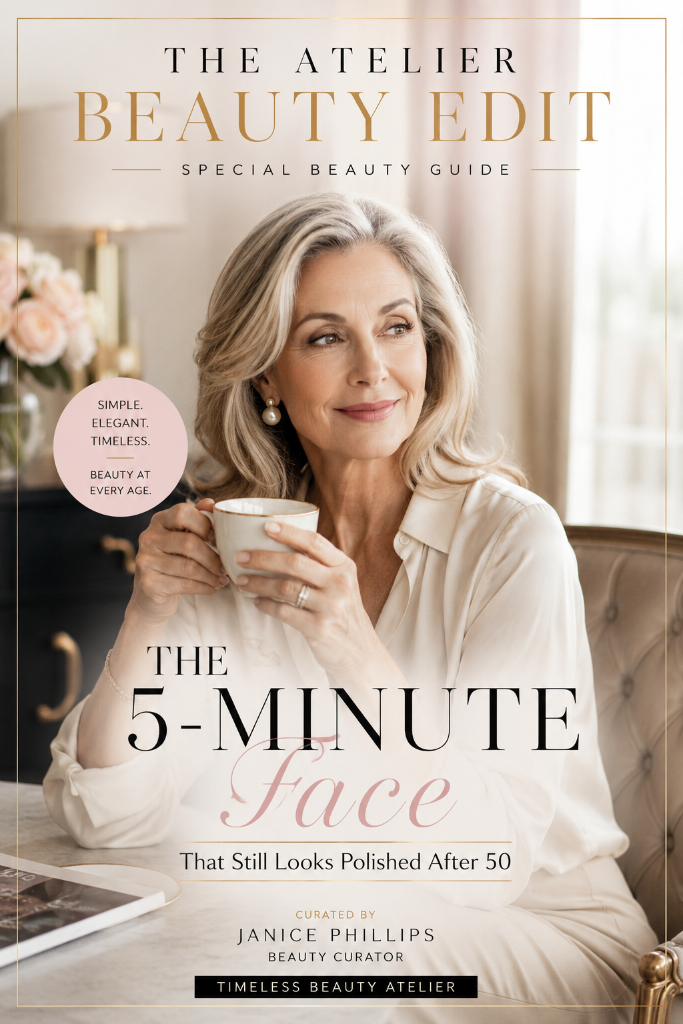
The 5-Minute Face That Still Looks Polished After 50
Discover a beautifully simple makeup routine designed specifically for mature skin.
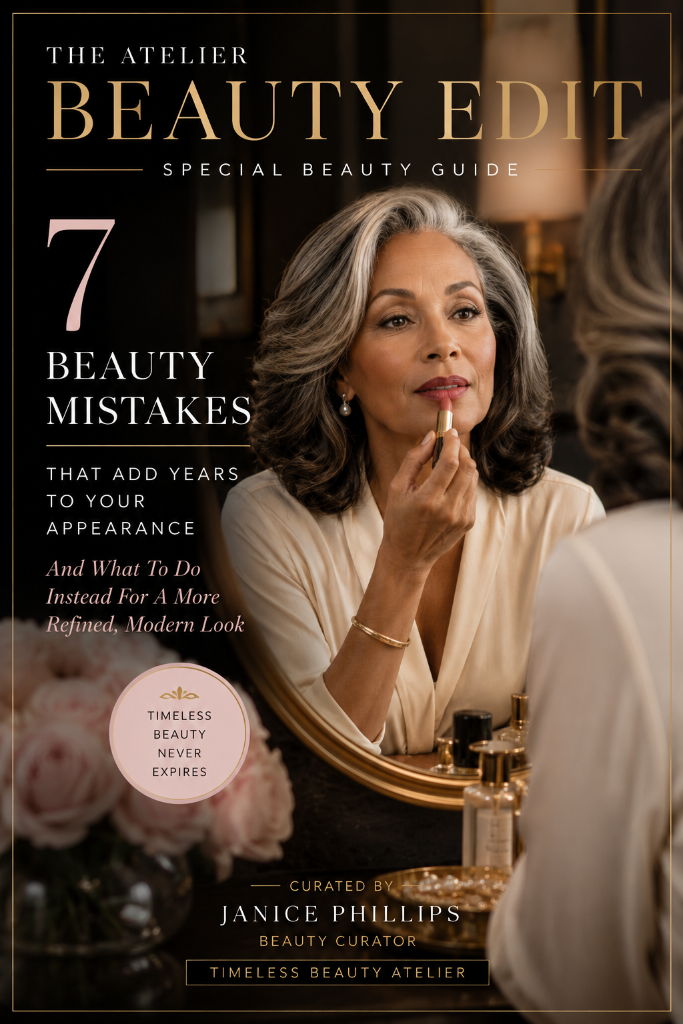
7 Beauty Mistakes That Add Years to Your Appearance
Learn seven common beauty habits that may unintentionally age your appearance—and the simple changes that can make a noticeable difference.
Continue Your Timeless Beauty Journey
Join the Timeless Beauty Atelier Society for beauty tips, skincare insights, exclusive offers, and monthly beauty inspiration designed for women who appreciate timeless elegance.