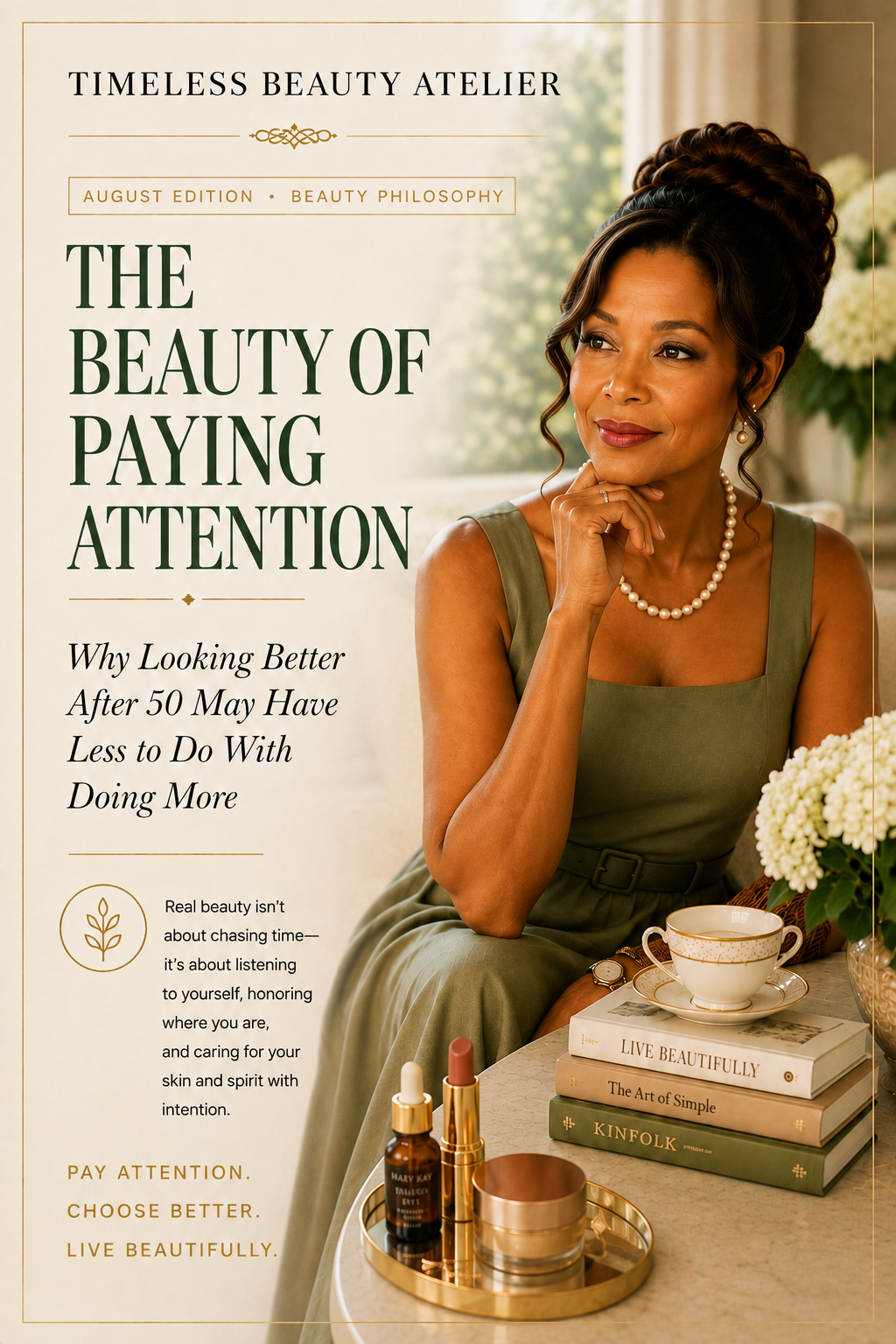
The Beauty of Paying Attention: A More Intentional Approach to Beauty After 50
The Beauty of Paying Attention
Why Looking Better After 50 May Have Less to Do With Doing More
At some point, almost without noticing, many of us became very good at collecting beauty advice. Use this serum. Try this ingredient. Add this step. Don't forget your neck.
Change your foundation. Exfoliate more. Exfoliate less. And somewhere between the twelve-step routines and the latest miracle ingredient, something rather simple got lost:
Paying attention to ourselves.
Not to trends. Not to what another woman's skin is doing. Not to the face we had twenty years ago. To the woman standing in the mirror today. Because perhaps one of the most useful things we can learn about beauty after 50 is that our needs become increasingly individual. And that means the answer isn't always another product. Sometimes the answer is simply noticing.
Your Beauty Routine Shouldn't Be on Autopilot
Think about how many things in your beauty routine you do simply because you've always done them. The same cleanser. The same foundation shade. The same placement of blush. The same eyebrow shape. The same amount of powder. The same moisturizer every morning and every night. There's nothing wrong with consistency. Until consistency stops serving you.
Our skin changes. Our hair changes. Our coloring changes. Even the proportions and contours of our faces change subtly over time. And yet we can remain remarkably loyal to routines created for a woman we haven't been in years. Perhaps mature beauty begins when we give ourselves permission to change the routine.
Notice Before You Fix
One of the themes running through this August edition has been listening. Your skin may feel tighter after cleansing. Your usual foundation may suddenly look heavier.
The concealer you've loved for years may begin settling differently beneath your eyes. Your cheeks may look better with blush placed slightly higher. Your neck may need the same thoughtful attention you've always given your face. These aren't failures.
They're information. And information is useful. Instead of immediately asking,
What product should I buy? try asking,
What exactly has changed?
That one question can save us an extraordinary amount of money, frustration—and bathroom cabinet space.
Mature Beauty Rewards Editing
When we're younger, experimentation often means adding. Another color. Another product. Another trend. With experience, we begin discovering the elegance of editing.
Perhaps you don't need three serums every morning. Perhaps your skin looks better with lighter foundation. Perhaps you prefer your natural silver hair to constantly chasing the roots. Perhaps the dramatic eye makeup you once loved no longer feels like you. Or perhaps it still does. That's the point. There isn't one correct way to age beautifully.
The sophistication comes from knowing what still belongs—and what doesn't.
Stop Trying to Correct Everything at Once
One of the quickest ways to become dissatisfied with your appearance is to turn the mirror into an inspection station. Fine lines. Neck. Jawline. Dark spots. Brows. Under-eyes.
Texture. Hair. Suddenly we're no longer looking at a woman. We're looking at a list of maintenance issues. That's an exhausting way to experience beauty.
Instead, step farther away from the mirror. Literally. Look at the whole composition. What do you notice first? Perhaps your eyes look wonderful today. Perhaps your skin has a beautiful glow. Perhaps that lipstick makes your entire face come alive. Beauty is experienced as a whole. Other people are not walking toward us mentally cataloging our pores. And if they are, frankly, they need a hobby.
Let Your Routine Change With the Seasons
Paying attention also means recognizing that what your skin needs in January may not be what it needs in August. Heat, humidity, air conditioning, travel, sun exposure, sleep, stress and even changes in medication can affect how skin behaves.
That means your beauty routine doesn't have to be permanently carved into stone. A richer moisturizer may feel wonderful during winter and too heavy during summer. A foundation that looks luminous in cooler months may feel like too much in August. Your skin might want more hydration one week and less exfoliation the next. There is no prize for using exactly the same products every single day. A thoughtful routine responds.
Learn the Difference Between a Trend and a Tool
Beauty trends aren't inherently bad.
Some are genuinely useful.
Underpainting, which we've explored in this edition, can create beautiful dimension with less visible makeup.
New formulations can improve how products sit on mature skin.
Certain ingredients have strong evidence behind them.
But every trend should have to answer one question before entering your routine:
Does this actually serve me?
Not:
Is everyone talking about it?
Not:
Did someone on social media make it look amazing?
And definitely not:
Am I too old if I don't understand what a "glass skin cloud blush latte face" is supposed to be?
Beauty trends are tools.
You are not required to become their employee.
Your Face Doesn't Need to Become a Project
There is an enormous commercial industry built around keeping women dissatisfied just enough to continue searching. The next cream. The next device. The next procedure.
The next promise. There are wonderful products in the world. There are excellent treatments. And there is absolutely nothing wrong with wanting to look your best.
But there is a difference between caring for yourself and constantly trying to correct yourself. That distinction becomes especially important as we age. Because if our definition of beauty requires the absence of visible aging, then eventually every woman loses. I don't find that particularly interesting. I'd rather build a beauty philosophy in which the woman becomes more discerning as she grows older—not more frightened.
Buy Less. Choose Better.
Paying attention naturally changes the way we shop. When you know your skin, you become harder to sell to. That's a good thing. You begin asking better questions.
What problem does this solve? Do I already own something that does the same thing? Will I realistically use it? Does the formulation suit my skin? Is this an improvement—or simply something new? That doesn't eliminate pleasure from beauty shopping. It makes the pleasure more intentional.
A beautifully formulated moisturizer you genuinely love using is worthwhile. A lipstick that makes you feel terrific every time you put it on has earned its place. A seventeenth serum purchased because someone promised it would change your life? We may need to have a little talk.
Pay Attention to What Makes You Feel Beautiful
This part doesn't get discussed enough. There are things we do simply because they make us feel more like ourselves. A fragrance. Freshly washed hair. Pearl earrings.
A beautiful manicure. Lipstick before leaving the house. A skincare ritual at night.
These things aren't frivolous simply because they aren't medically necessary. Ritual has value. Beauty can be a form of attention we give ourselves. The distinction is whether the ritual leaves us feeling cared for—or inadequate. Keep the first. Be suspicious of the second.
There Is Freedom in Knowing Yourself
Perhaps this is one of the quiet advantages of getting older. We've tried things. We've made questionable eyebrow decisions. We've survived trends we would prefer not to discuss. Eventually, we begin knowing ourselves. And that knowledge can make beauty much simpler.
You know which colors make your face come alive. You know whether you enjoy a five-minute routine or a luxurious forty-five-minute ritual. You know whether you feel more yourself with gray hair, colored hair, short hair, long hair—or whatever happens to please you. You don't need permission. And you certainly don't need to become invisible simply because you've crossed an arbitrary birthday.
Beauty Is Attention
When we began this August conversation, we started with the idea of listening to your skin. But perhaps the larger idea is listening to yourself. Pay attention to what has changed. Pay attention to what still works. Pay attention to what makes you feel beautiful. Pay attention to what you're buying and why. Pay attention to the difference between caring for yourself and chasing yourself.
Because beauty after 50 doesn't have to become an increasingly complicated attempt to hold time still. It can become something much more elegant. A relationship with yourself that gets better informed with age.
Curator's Reflection
I don't believe mature beauty is about surrendering. And I don't believe it's about fighting. I think it's about discernment.
Knowing when something needs attention. Knowing when something needs changing. Knowing when something needs absolutely nothing at all. There is tremendous confidence in being able to look in the mirror without immediately searching for a problem to solve. Care for your skin. Wear the makeup. Try the wonderful lipstick. Buy the beautiful cream when it's truly worth it. But remember that beauty isn't created by accumulating more and more things.
Sometimes it begins with something remarkably simple: Pay attention.
You may discover you've been more beautiful than you realized.
Enjoyed this article?
Continue exploring our complimentary beauty resources created especially for women over 50.
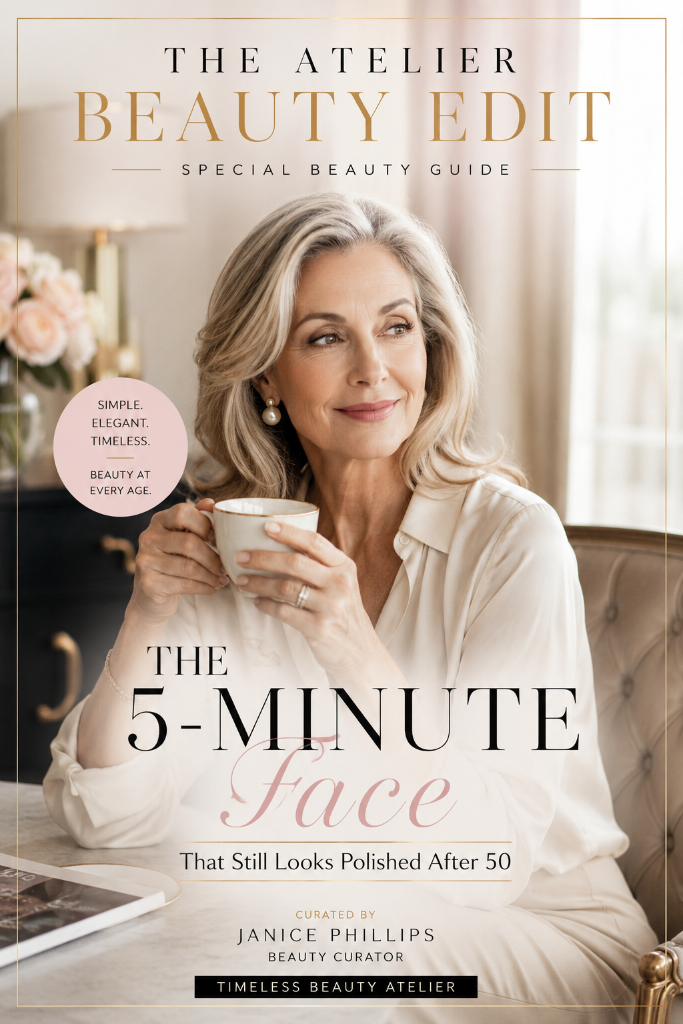
The 5-Minute Face That Still Looks Polished After 50
Discover a beautifully simple makeup routine designed specifically for mature skin.
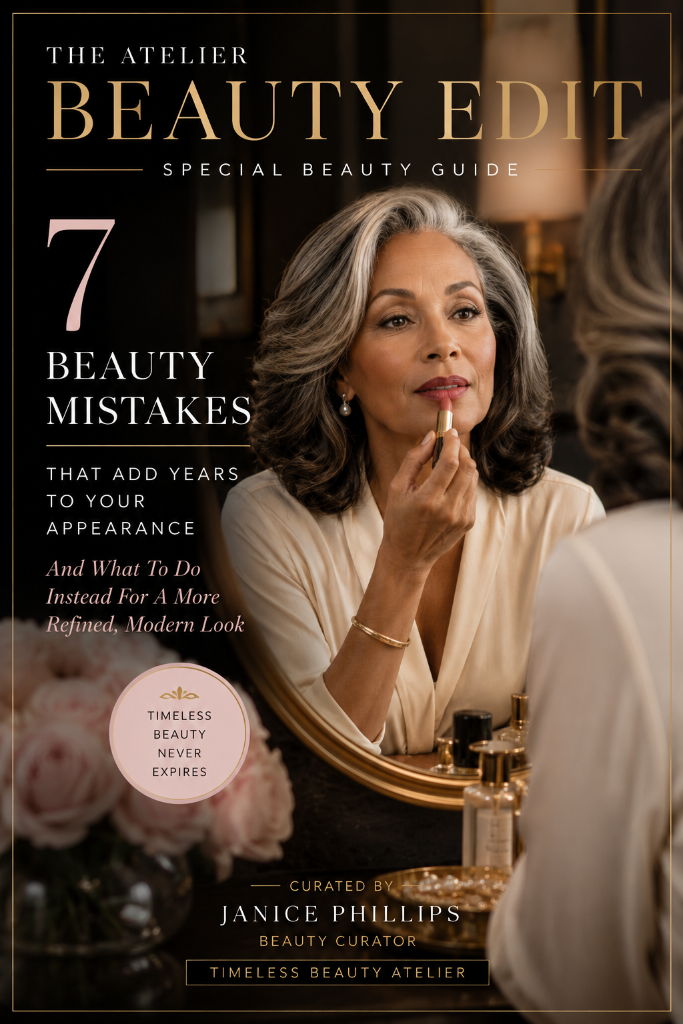
7 Beauty Mistakes That Add Years to Your Appearance
Learn seven common beauty habits that may unintentionally age your appearance—and the simple changes that can make a noticeable difference.
Continue Your Timeless Beauty Journey
Join the Timeless Beauty Atelier Society for beauty tips, skincare insights, exclusive offers, and monthly beauty inspiration designed for women who appreciate timeless elegance.